
Pattern 01 / Orbital Systems
Orbital Industrialization
Orbit is shifting from a destination for missions to infrastructure for industry — cadence, constellations, and now compute.
Who governs a commons whose access is priced by a single launch provider?
← All patterns
Pattern signature · 28 days
- Wire stories
- 2769.4% of the corpus
- Implementation ratio
- 30%49 done / 112 promised
- Awaiting proof
- 101No verification yet
- Source outlets
- 98Distinct publications
Observed 2026-08-01 — 2026-08-28
Read the observations Composition & daily values ↗
What the 276 stories actually are: Implementation 49 · Announcement 112 · Incident 5 · Capital 22 · Record & Analysis 88
| Date | Wire stories | Implementations | Announcements |
|---|---|---|---|
| 2026-08-01 | 11 | 0 | 6 |
| 2026-08-02 | 9 | 0 | 3 |
| 2026-08-03 | 6 | 0 | 1 |
| 2026-08-04 | 11 | 0 | 7 |
| 2026-08-05 | 7 | 0 | 3 |
| 2026-08-06 | 11 | 1 | 3 |
| 2026-08-07 | 12 | 5 | 3 |
| 2026-08-08 | 12 | 5 | 1 |
| 2026-08-09 | 13 | 1 | 7 |
| 2026-08-10 | 9 | 0 | 2 |
| 2026-08-11 | 12 | 2 | 6 |
| 2026-08-12 | 10 | 5 | 3 |
| 2026-08-13 | 4 | 1 | 1 |
| 2026-08-14 | 6 | 0 | 3 |
| 2026-08-15 | 10 | 1 | 5 |
| 2026-08-16 | 14 | 1 | 8 |
| 2026-08-17 | 9 | 1 | 5 |
| 2026-08-18 | 8 | 4 | 3 |
| 2026-08-19 | 12 | 4 | 4 |
| 2026-08-20 | 14 | 1 | 10 |
| 2026-08-21 | 6 | 2 | 1 |
| 2026-08-22 | 9 | 1 | 3 |
| 2026-08-23 | 14 | 2 | 5 |
| 2026-08-24 | 7 | 1 | 4 |
| 2026-08-25 | 12 | 3 | 4 |
| 2026-08-26 | 8 | 4 | 2 |
| 2026-08-27 | 8 | 2 | 4 |
| 2026-08-28 | 5 | 0 | 3 |
Launch cadence has become routine enough to stop being news, which is precisely when infrastructure forms. Constellations now carry consumer connectivity, proposals put datacenters in orbit, and national programs increasingly buy rides rather than build them. The governance layer — debris liability, spectrum, orbital slots — has not kept pace with the industrialization.
Who governs a commons whose access is priced by a single launch provider?
Binding multilateral rules on debris, slots, and spectrum bind the dominant operators, not only state actors.
Return to the evidence
Explore the sources, from primary records to independent research and reporting.
Records behind the pattern
Follow this pattern to its underlying data and public documentation.
View sources →Research and its boundaries
Read the research associated with this pattern and inspect its sources.
View sources →News and in-depth reporting
Trace current developments back to the stories carrying this pattern.
View sources →The evidence
Highest-substance stories carrying this pattern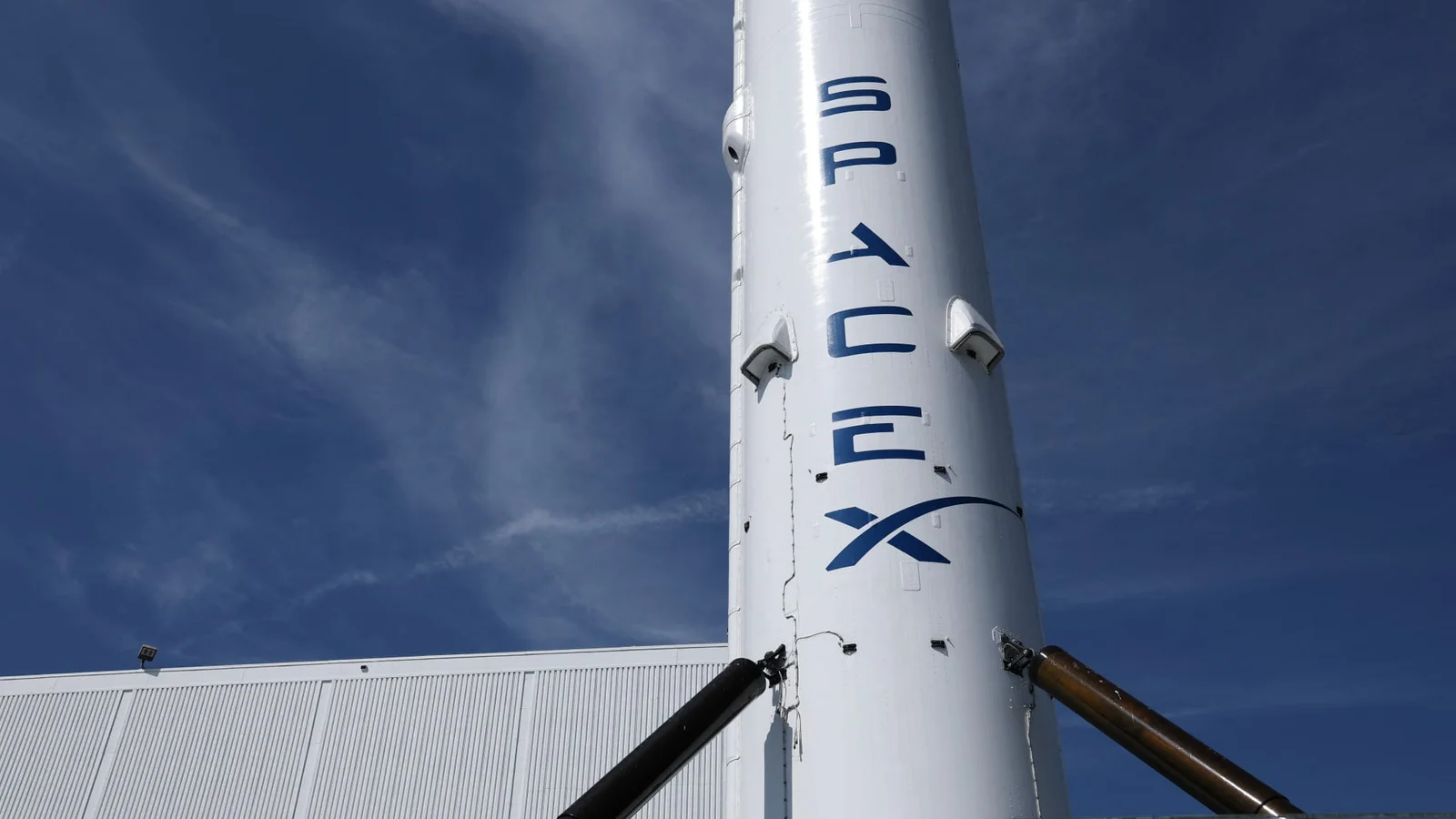
Prediction-market traders expect SpaceX, OpenAI and Anthropic to debut on Nasdaq with first-day valuations north of $1 trillion—potentially surpassing Berkshire Hathaway. SpaceX is valued around $1.25 trillion and could close day one above $2.2 trillion; OpenAI is valued about $852 billion with a 65% chance to end above $1.4 trillion; Anthropic could exceed $1.8 trillion on day one, with talks of a new round at roughly $900 billion. OpenAI reportedly plans a confidential IPO this year (and Kalshi puts a 92% chance of an IPO in 2026, Anthropic 69%). Despite these firms not yet profitable, analysts say the US market (~$70 trillion) could absorb multiple mega-IPOs, though demand remains a risk.
SpaceX appears to have reached the Moon via an unintended route after the Falcon 9 upper stage crashed into the lunar surface at about 5,400 mph, carving a ~60-foot crater near the Einstein and Bell craters, while Firefly Aerospace’s Blue Ghost 1 lunar lander successfully touched down. NASA says the impact poses no danger to Earth. Elon Musk shared a video of the crash. On the business side, SpaceX reported strong Q2 revenue (~$7.81 billion) with a small EPS loss, and forecast $1 trillion in annual revenue by decade’s end, as NASA’s Artemis program remains dependent on SpaceX for lunar presence and Musk reiterates Mars ambitions for the next 5–7 years.

SpaceX, Tesla and Intel formalized Terafab, a 100-million-square-foot, vertically integrated AI chip fabrication campus in Grimes County, Texas, with a potential total investment up to $119 billion and an initial target of $16.8 billion. The plan envisions a single site for logic, memory, packaging and testing capable of producing 100–200 billion chips and over 1 terawatt of AI compute annually, signaling a shift in the “compute landlord” thesis as SpaceX moves toward building its own silicon supply chain for robotics and autonomous systems. However, IPO filings describe Terafab as a general framework with no binding commitments and Intel’s exact role remains undisclosed. The project includes about 3,000 construction jobs and 1,800 permanent positions, plus a $30 million Texas Enterprise Fund grant, but feasibility and competitiveness versus established foundries like TSMC remain uncertain for years to come.
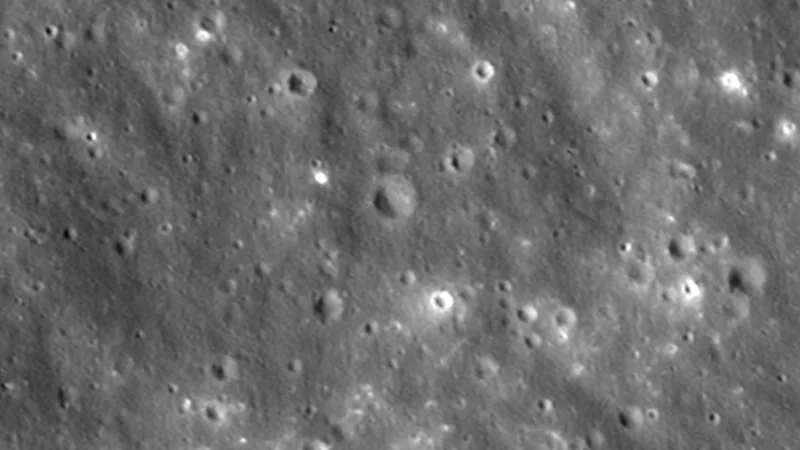
NASA’s Lunar Reconnaissance Orbiter released new images showing a roughly 60-foot crater on the Moon created when SpaceX’s Falcon 9 upper stage collided with the lunar surface on Aug. 5 after being discarded in orbit. Danuri’s observations guided follow-up imaging, and NASA notes the event posed no threat to Earth while providing data to study the Moon’s surface and inform future astronaut infrastructure and shielding.
Claims awaiting proof
Promised, not yet verified — the open edge of the pattern- Betelgeuse’s Hidden Companion Emerges in Rare VLT ImageAwaiting ProofScience Daily · 2026-08-28
- Starship push slows Space Coast cadence as Florida launches pauseAwaiting ProofArs Technica · 2026-08-28
- Washington Prepares for Blood Moon Partial Lunar Eclipse TonightAwaiting ProofMyNorthwest.com · 2026-08-28
- Colorado Ready for a Red-Hued Lunar Eclipse TonightAwaiting ProofThe Colorado Sun · 2026-08-27
- Roman Space Telescope to map the cosmos and hunt for new worldsAwaiting ProofWRAL · 2026-08-27
What the literature says
662 works in this field · via OpenAlexLEO Mega Constellations: Review of Development, Impact, Surveillance, and Governance
Satellite-based quantum information networks: use cases, architecture, and roadmap
Review of Satellite Interferometry for Landslide Detection in Italy
The space sustainability paradox
From new space to big space: How commercial space dream is becoming a reality
Tipping Points of Space Debris in Low Earth Orbit
Check it yourself
The instruments that would confirm or refute this patternNASA Open Data Portal
NASA · ContinuousMission records, launch manifests, and instrument datasets.
CelesTrak Orbital Element Sets
CelesTrak / T.S. Kelso · Multiple times dailyHow many objects are actually in orbit, whose they are, and where debris is accumulating.
OpenAlex Scholarly Graph
OurResearch · DailyWhether a claim has peer-reviewed support, and how contested the underlying literature is.
FAA Commercial Space Transportation Data
Federal Aviation Administration · Per operationLicensed launch and reentry operations — the cadence of record.
Everything in this pattern
276 stories · Space, Space Daily, Yahoo Finance and others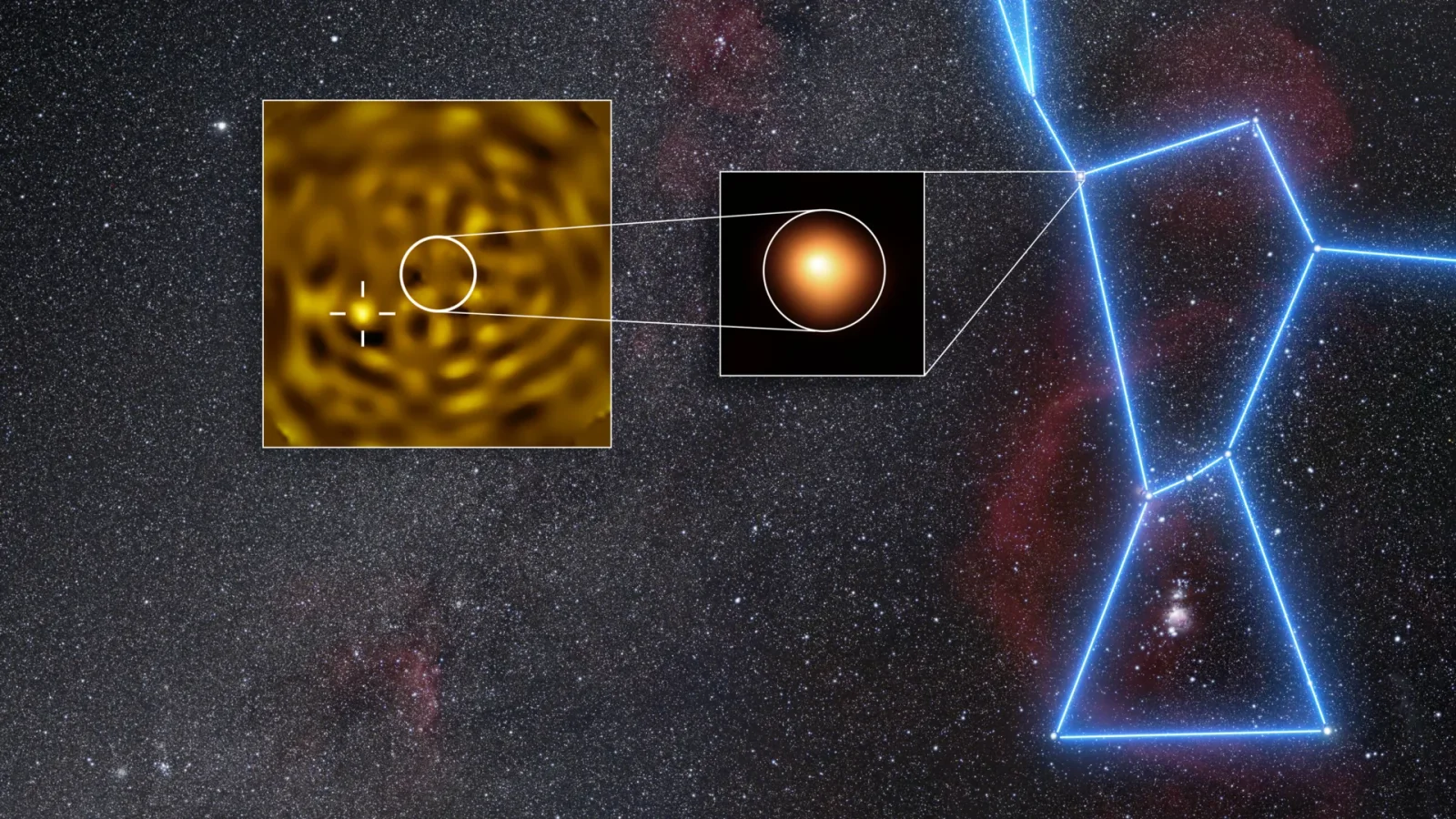
Astronomers using ESO's VLT and its SPHERE instrument captured the clearest image yet of Betelgeuse B, the long-suspected stellar companion to Betelgeuse, now estimated to be 2–3 solar masses; this finding helps explain Betelgeuse's brightness changes and could affect its future evolution and supernova, with further observations needed to confirm its orbit.
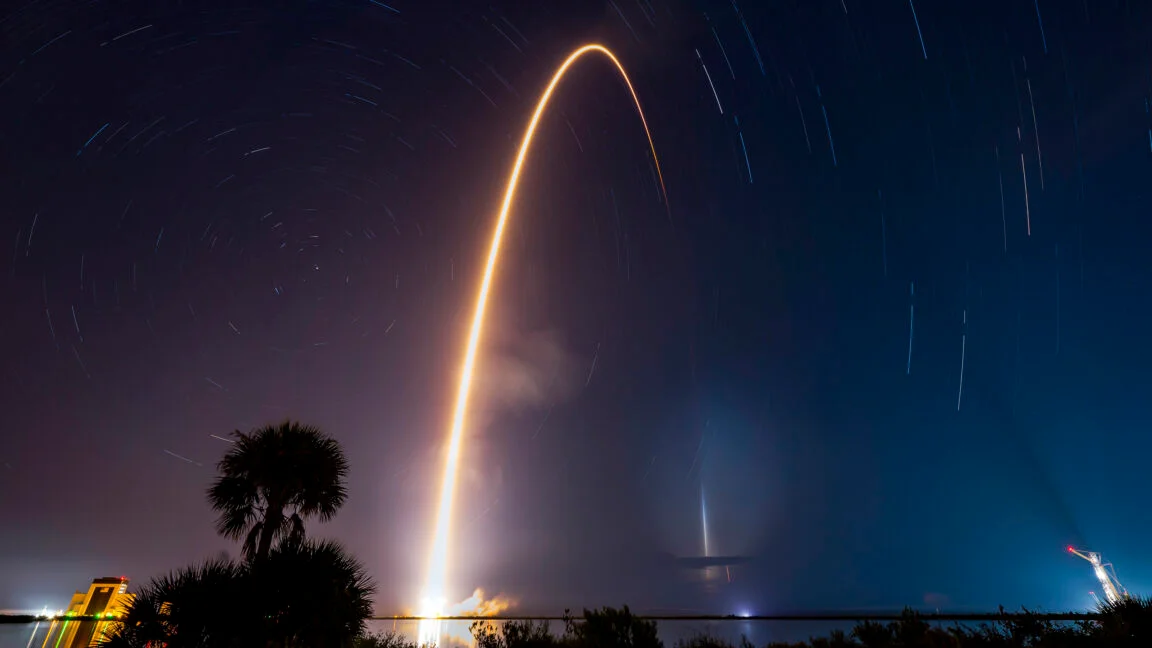
SpaceX will dramatically cut Falcon 9/Heavy launches from Florida for the rest of the year as it pivots toward Starship, moving most Starlink missions to Vandenberg and planning Starship launches from Cape Canaveral by year-end 2026 (with 2027 more likely). The Florida Space Coast could see only about two launches per month, down from eight–nine, while West Coast flights increase; upcoming Florida missions include a Falcon Heavy launch of NASA's Nancy Grace Roman Space Telescope on Aug. 30 and a crewed ISS flight in September, as officials plan to phase out Falcon 9 for commercial work in favor of Starship.
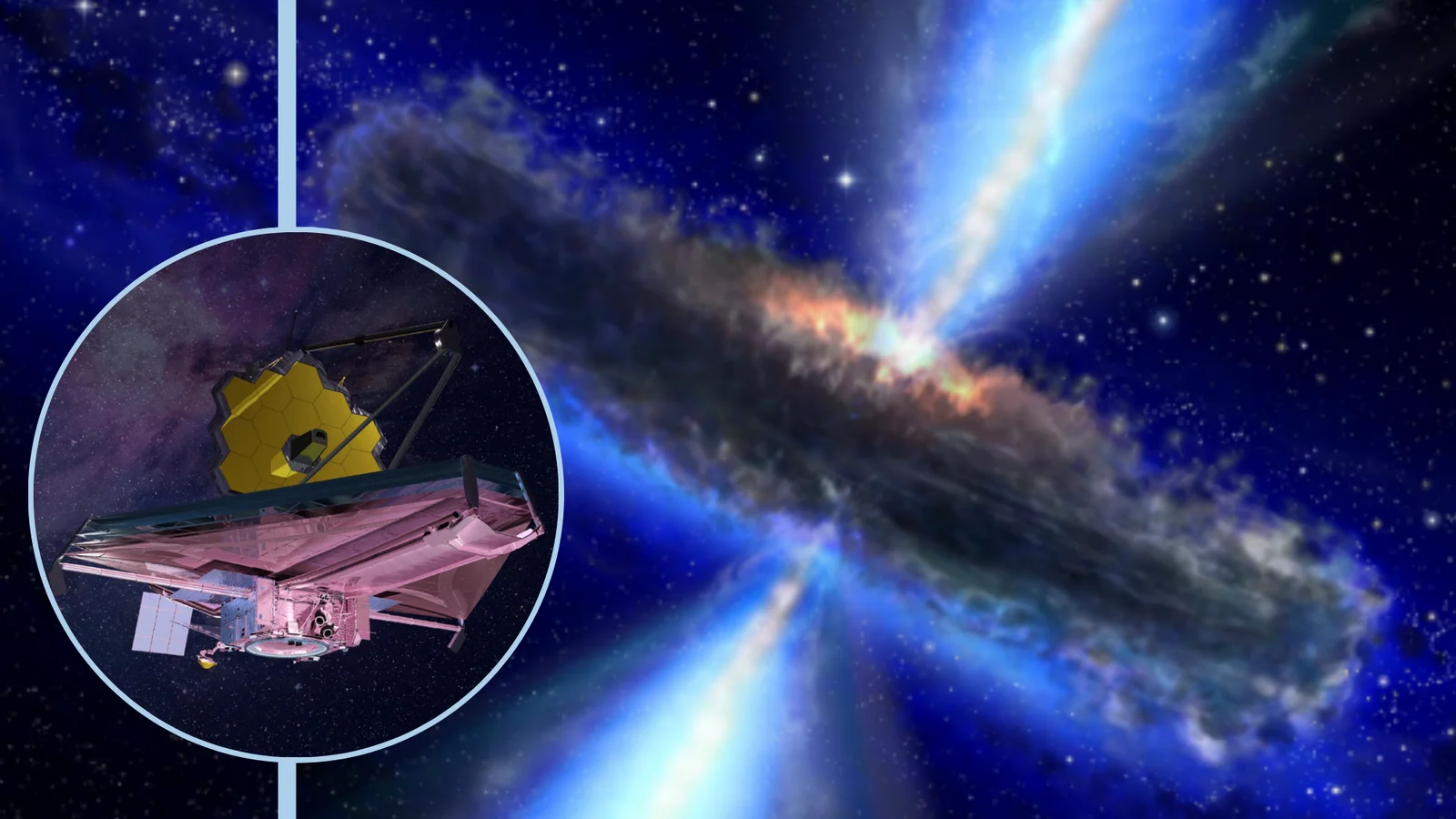
Using JWST's Mid-Infrared Instrument, astronomers followed 72 young sun-like stars to map how planet-forming material escapes their disks. The findings show gas-dust disks disperse through two shifting regimes: early, magnetically driven jets and winds dominate mass loss, and as disks thin, high-energy stellar radiation drives photoevaporation. This evolving mechanism sets a fundamental clock for when gas giants can form and helps explain where different types of planets are likely to emerge.
Washington residents can watch a blood moon during a partial lunar eclipse tonight, with 96.2% of the Moon darkened at its peak. The event begins as the Moon enters Earth’s outer shadow at 6:23 p.m., the partial phase starts at 7:33 p.m., the maximum occurs at 9:12 p.m., and the penumbral phase ends around midnight. No eye protection is needed to view it, and temperatures will be in the low 60s. Space.com notes this will be the best North American eclipse until 2028.

Navy Lt. Cmdr. Jonny Kim, a former Navy SEAL, Harvard-trained doctor, and eight-month ISS veteran, is leaving NASA after nearly a decade to resume active duty in naval aviation training, with NASA praising his impact on future space missions and leadership.
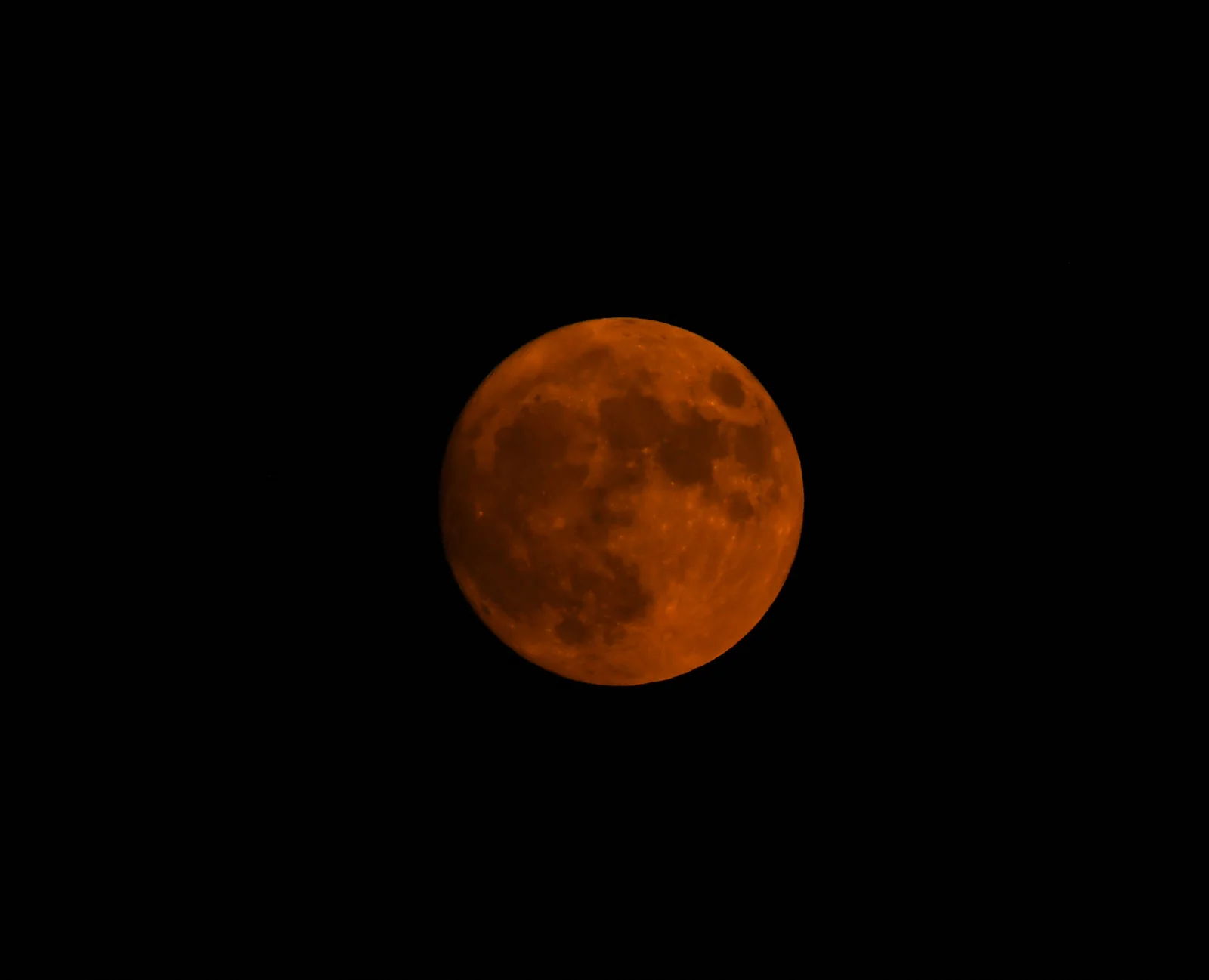
Colorado will experience a near-total lunar eclipse Thursday night, turning the Moon a reddish hue; the eclipse begins around 8:30 p.m. and lasts until 1 a.m., with peak visibility between 9:45 and 10:45 p.m. and about 92–95% of the Moon in Earth's shadow. Most of the state should have a good view, though southern areas face higher cloud risk; for best results, seek darker skies away from city lights, and be ready to drive a bit for patches of clearer sky—telescopes or binoculars can help, but the naked eye should still deliver a striking show.
NASA’s Nancy Grace Roman Space Telescope is set to launch from Kennedy Space Center aboard a SpaceX Falcon Heavy, delivering a wide-field view at least 100 times larger than Hubble to map billions of galaxies and stars, search for thousands of exoplanets, and study dark matter and dark energy, generating about 1.4 terabytes of data per day; first images come after a three-month commissioning, and once science operations begin the data will be publicly available.
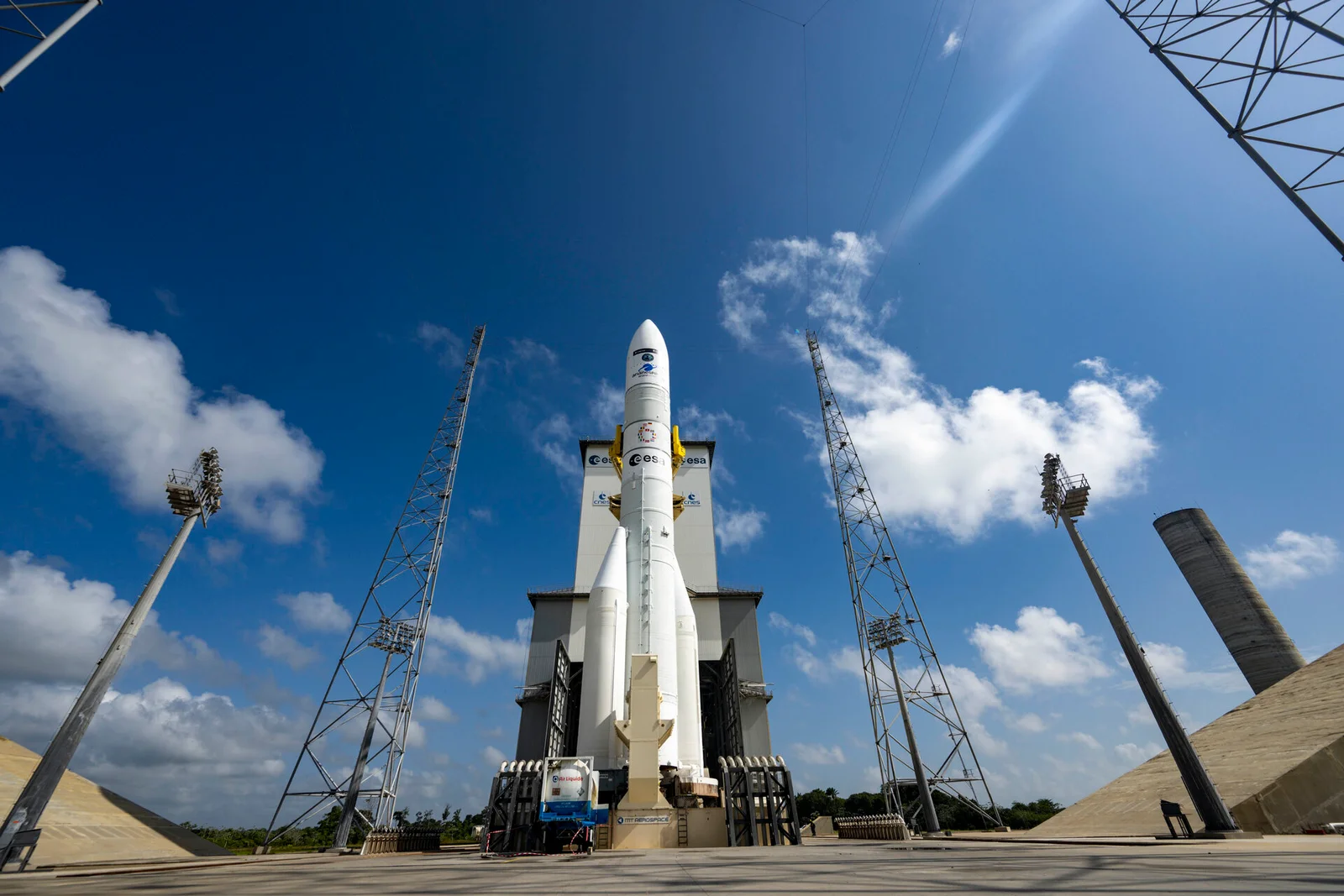
MTG-I2, the Meteosat Third Generation-Imager-2 satellite, has been encapsulated inside the Ariane 6 fairing and is on the launch pad in French Guiana for liftoff on 27 August; the fairing is closed, the upper segment hoisted onto the launcher, and the Mobile Gantry will roll away before countdown. After extensive testing in Cannes and transport to the spaceport, MTG-I2 will orbit for at least eight and a half years and will provide high‑resolution atmospheric data every 2.5 minutes to improve weather forecasts over Europe and northern Africa, aiding early warnings for severe storms and heavy rain. VA270 marks Ariane 6’s ninth launch, placing MTG-I2 into geostationary transfer orbit; the mission is led by ESA, built by Thales Alenia Space with OHB System and Leonardo, and operated by EUMETSAT after commissioning.
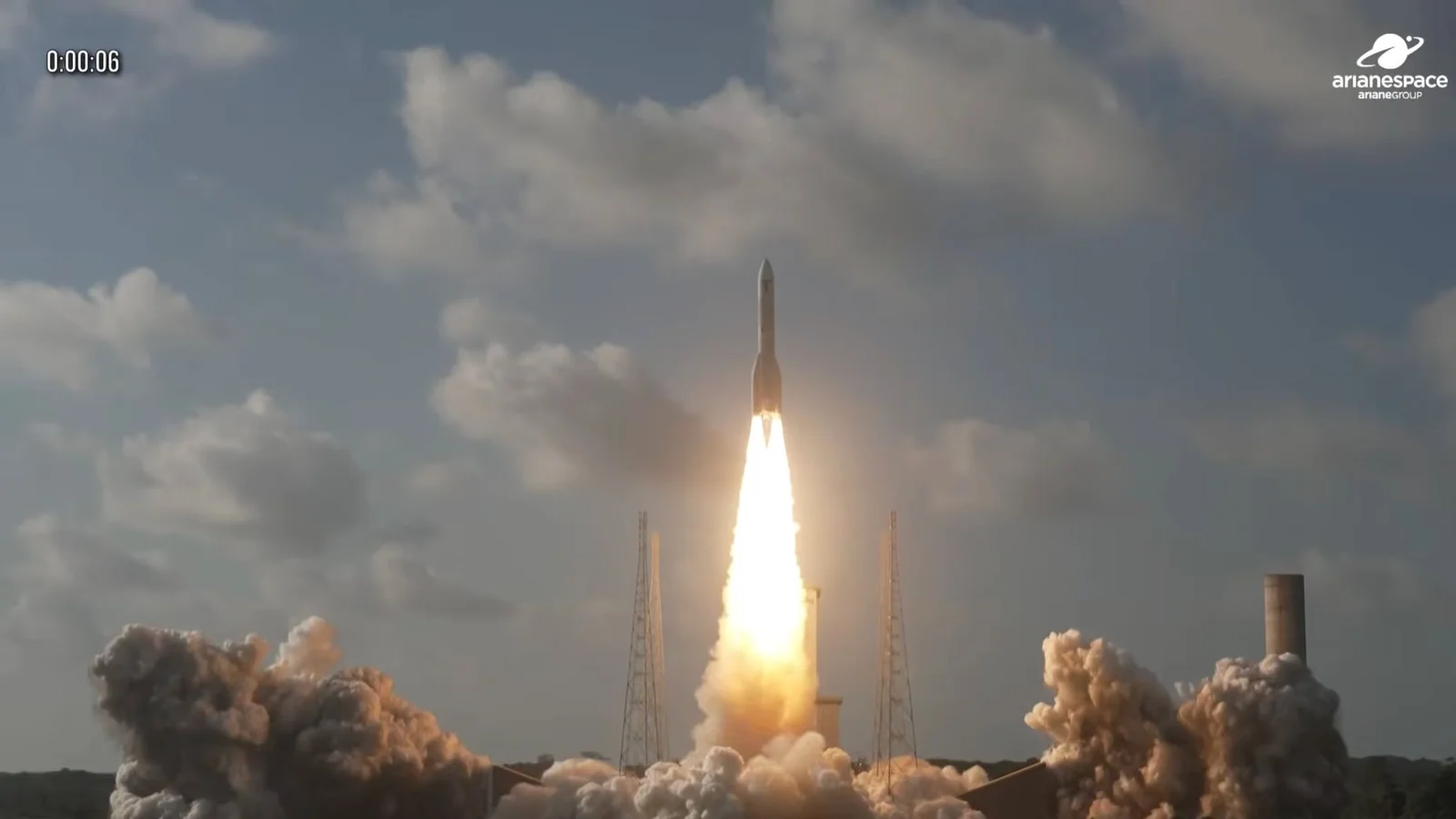
Europe's Ariane 6 rocket launched MTG-I2, the second imaging satellite in the Meteosat Third Generation system, from Kourou to geostationary transfer orbit about 36 minutes after liftoff. MTG-I2, ~3,800 kg, joins MTG-I1 and MTS-S1 to enable early severe-weather detection, improved forecasting and climate monitoring, marking Ariane 6's ninth flight and underscoring its capability to lift heavy payloads to GTO.
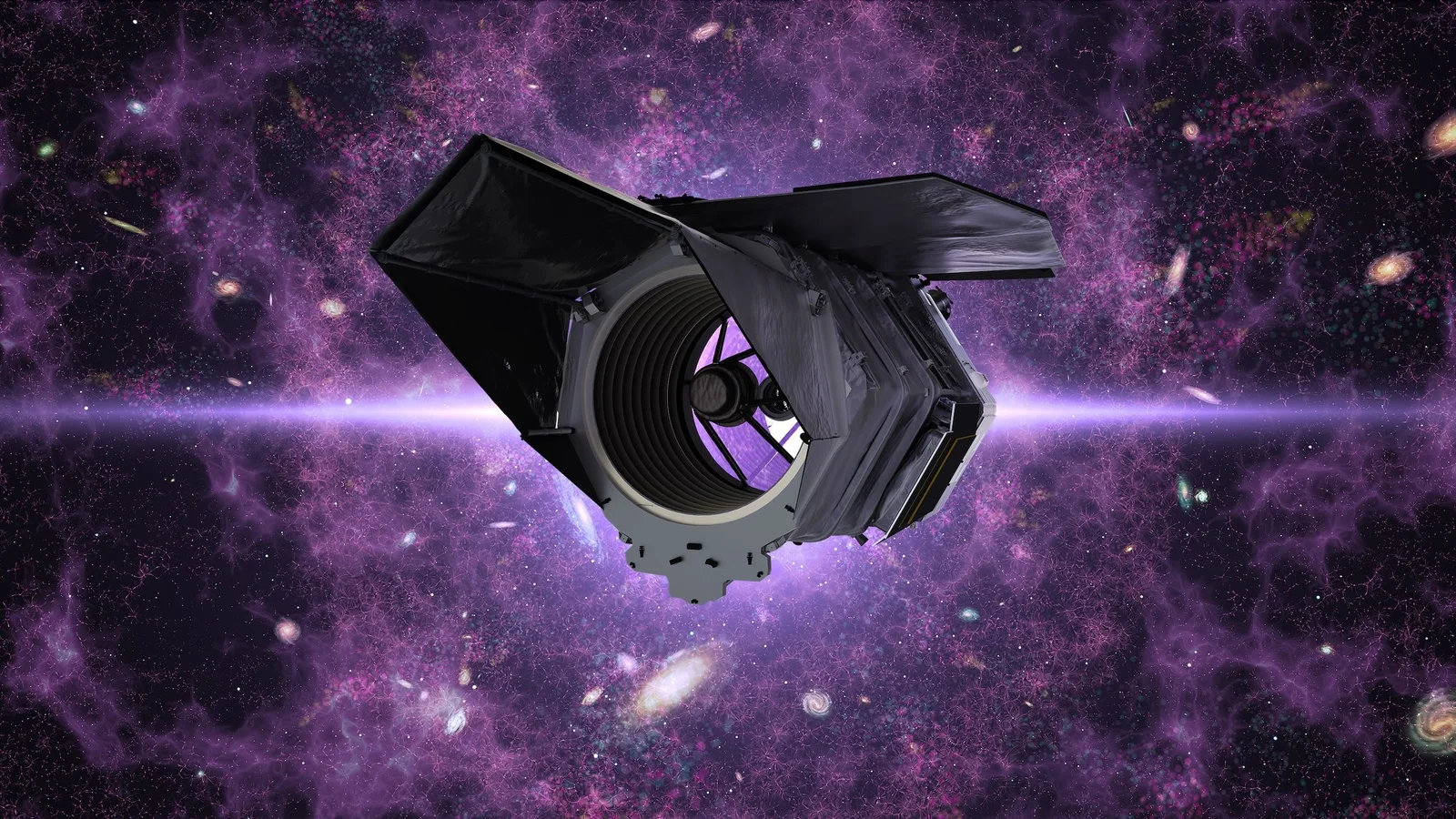
NASA's Nancy Grace Roman Space Telescope, after a scare of cancellation amid FY2026 budget cuts, has cleared political hurdles, was completed ahead of schedule and under budget, and is set for Aug. 30 liftoff on a SpaceX Falcon Heavy from Kennedy Space Center. It will head to the sun–Earth L2 point to probe dark matter and dark energy, discover exoplanets, and capture infrared images 50 times wider than JWST, marking a major milestone after nearly two decades and about $4 billion in development.
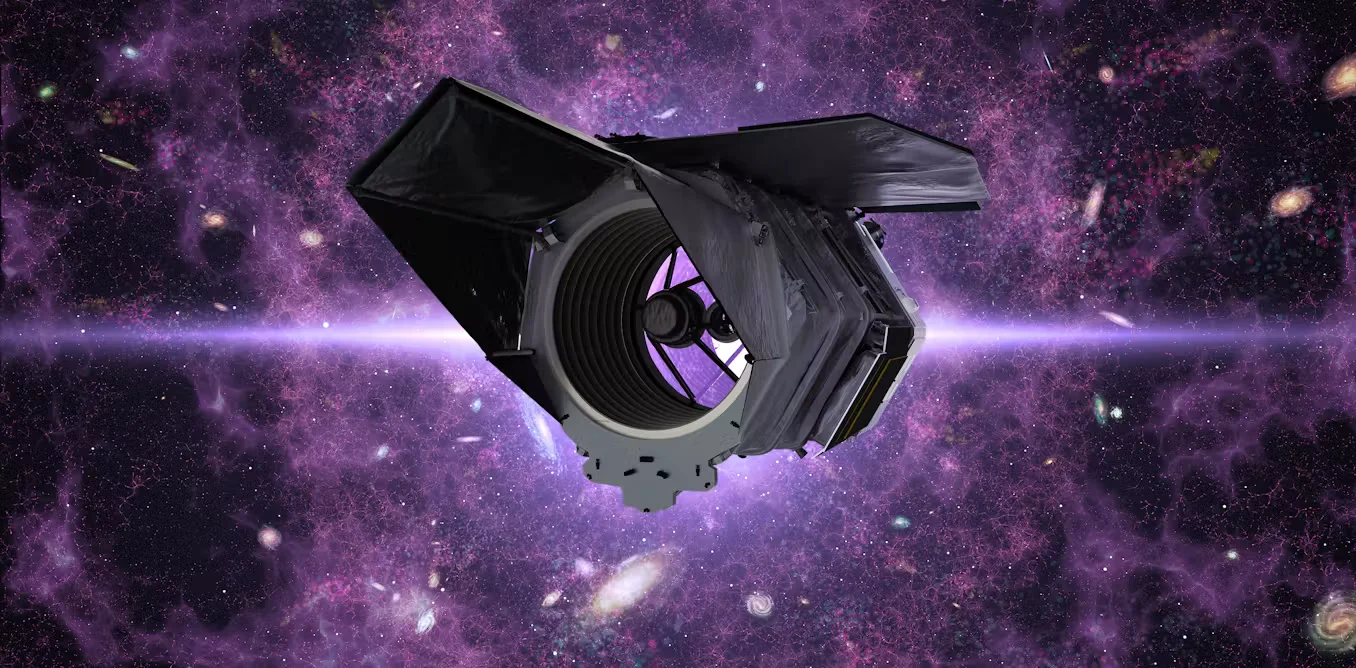
NASA is preparing to launch the Nancy Grace Roman Space Telescope by August 2026. Built from former spy-telescope hardware, it will survey a wide swath of the sky to map the three-dimensional distribution of dark matter, measure the universe’s expansion with supernovae, detect rogue planets via microlensing, and test coronagraphic techniques to image Earth-like planets, using 18 large near-infrared detectors totaling about 300 megapixels—advancing detector technology that underpins Webb-era astronomy and laying groundwork for the Habitable Worlds Observatory.
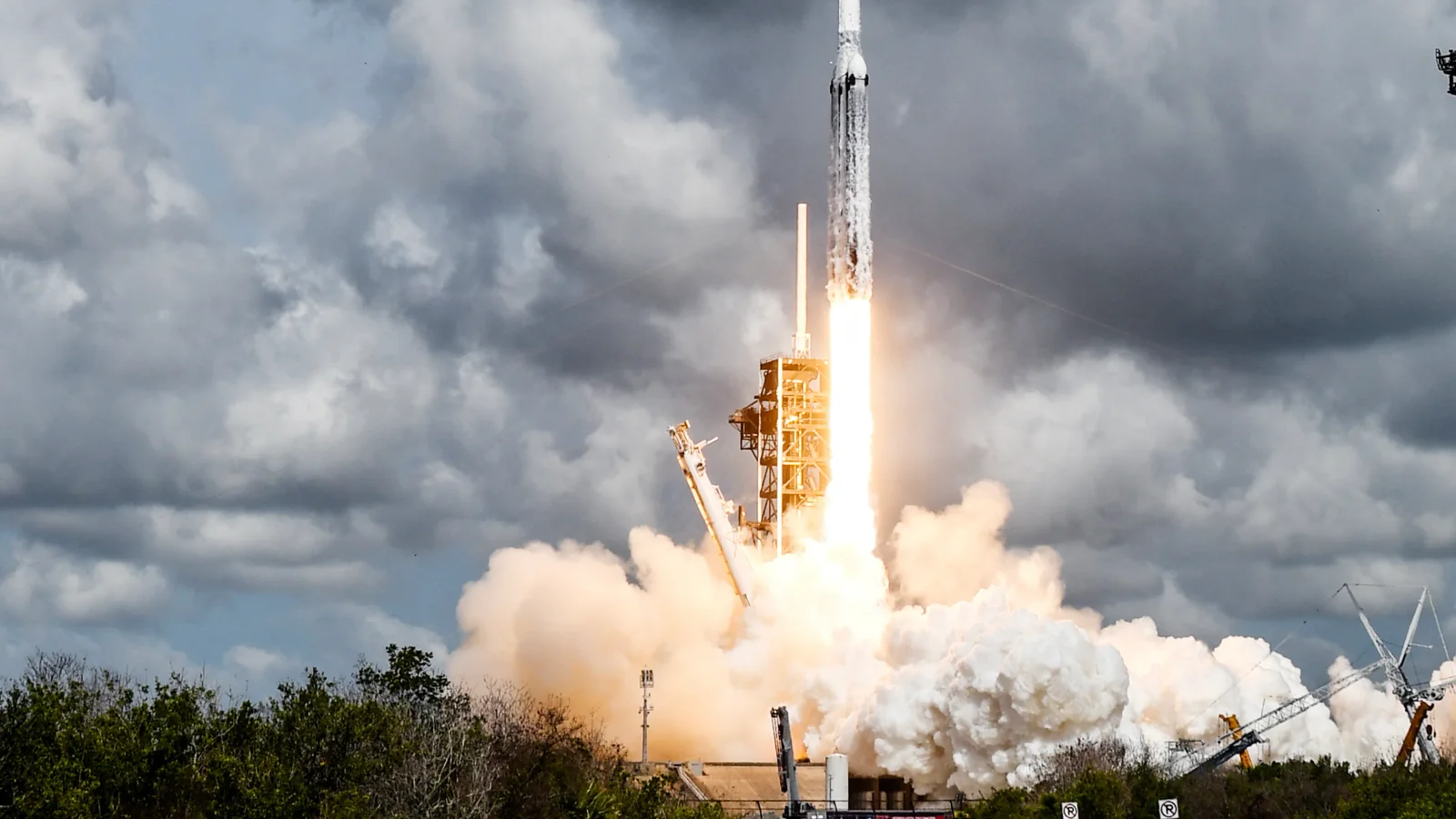
SpaceX’s Falcon Heavy is set for a rare Florida launch, carrying a NASA space telescope, and is expected to draw crowds as it returns to flight for the first time since late April.
Landscape and survey plates are illustrative, not measured geography. Artwork provenance ↗