
Pattern 02 / Health & Biology
The Longevity Frontier
Diseases defined by decline — pancreatic cancer, dementia, aging itself — are becoming targets with mechanisms, and prices.
Does mechanistic medicine reach the median patient, or only the insured one?
← All patterns
Pattern signature · 28 days
- Wire stories
- 2077.1% of the corpus
- Implementation ratio
- 32%32 done / 67 promised
- Awaiting proof
- 50No verification yet
- Source outlets
- 99Distinct publications
Observed 2026-08-01 — 2026-08-28
Read the observations Composition & daily values ↗
What the 207 stories actually are: Implementation 32 · Announcement 67 · Incident 20 · Capital 4 · Record & Analysis 84
| Date | Wire stories | Implementations | Announcements |
|---|---|---|---|
| 2026-08-01 | 9 | 1 | 2 |
| 2026-08-02 | 3 | 0 | 1 |
| 2026-08-03 | 11 | 1 | 2 |
| 2026-08-04 | 11 | 0 | 3 |
| 2026-08-05 | 13 | 1 | 8 |
| 2026-08-06 | 4 | 0 | 2 |
| 2026-08-07 | 7 | 2 | 3 |
| 2026-08-08 | 7 | 2 | 1 |
| 2026-08-09 | 8 | 1 | 5 |
| 2026-08-10 | 6 | 1 | 2 |
| 2026-08-11 | 8 | 2 | 1 |
| 2026-08-12 | 10 | 2 | 4 |
| 2026-08-13 | 10 | 1 | 6 |
| 2026-08-14 | 7 | 1 | 1 |
| 2026-08-15 | 5 | 1 | 2 |
| 2026-08-16 | 2 | 1 | 0 |
| 2026-08-17 | 7 | 0 | 2 |
| 2026-08-18 | 10 | 1 | 0 |
| 2026-08-19 | 11 | 3 | 0 |
| 2026-08-20 | 6 | 0 | 4 |
| 2026-08-21 | 9 | 3 | 2 |
| 2026-08-22 | 4 | 2 | 1 |
| 2026-08-23 | 13 | 1 | 6 |
| 2026-08-24 | 5 | 0 | 1 |
| 2026-08-25 | 6 | 0 | 2 |
| 2026-08-26 | 9 | 1 | 4 |
| 2026-08-27 | 1 | 1 | 0 |
| 2026-08-28 | 4 | 3 | 1 |
The oncology and neurology pipelines produced more mechanistic wins this quarter than the prior decade of incrementalism: a KRAS inhibitor doubling pancreatic survival, an mRNA cancer vaccine clearing Phase 3, virtual-cell models compressing discovery. Each arrives with a price attached. This pattern holds the gap between a therapy existing and a person receiving it.
Does mechanistic medicine reach the median patient, or only the insured one?
Median time from diagnosis to first dose converges across insurance status and across countries.
Return to the evidence
Explore the sources, from primary records to independent research and reporting.
Records behind the pattern
Follow this pattern to its underlying data and public documentation.
View sources →Research and its boundaries
Read the research associated with this pattern and inspect its sources.
View sources →News and in-depth reporting
Trace current developments back to the stories carrying this pattern.
View sources →The evidence
Highest-substance stories carrying this pattern
An experimental KRAS-inhibiting pill, daraxonrasib, significantly extends median survival in advanced pancreatic cancer (13.2 months vs. 6.7 months with chemotherapy) in a phase 3 trial, and is available to eligible patients via the FDA Expanded Access Protocol at 10 Intermountain Health hospitals while full approval is pending; it’s a second-line option with manageable side effects and is not a cure.

The FDA approved Revolution Medicines’ Rasonque, a daily KRAS-targeting pill for adults with metastatic pancreatic adenocarcinoma after one prior therapy or when chemotherapy isn’t feasible. In trials, median overall survival more than doubled (13.2 months vs 6.7) and death risk was reduced by about 60%, with no KRAS mutation test required. Priced at $39,800 per 30 days and backed by patient-support and expanded-access programs, the approval is viewed as a major advance and a potential platform for RAS-driven cancers, with off-label use anticipated and ongoing development of related therapies.

A 1940s UK sugar rationing policy limited sugar intake during the first 1,000 days of life. In a UK Biobank study of 64,761 people born 1951–1956, those exposed to sugar restriction in early life had dramatically lower adult cancer incidence (liver 69% lower; prostate 52%; lung 41%; rectal 40%; breast 36%), longer telomeres equating to about 2.2 years less biological aging, and persisted healthier diets into adulthood. The study, published in PNAS (2026) by Chen Zhu and Weilong Zhang, is observational but uses the rationing cutoff to suggest causal links between early sugar exposure and cancer risk.

New Neurology Open Access findings show that midlife type 2 diabetes, smoking, and high blood pressure substantially raise dementia risk; people with all three risk factors were more than twice as likely to develop dementia, and those with none had about 30 dementia-free years versus 17.5 years with all three, suggesting a potential ~13-year delay if vascular risks are managed. The study shows association, not causation, and experts urge lifestyle changes—DASH-style diet, regular exercise, adequate sleep, and quitting smoking—to protect brain health.
Claims awaiting proof
Promised, not yet verified — the open edge of the pattern- GLP-1 meds: Could their benefits extend far beyond weight loss?Awaiting ProofPeter Attia MD · 2026-08-28
- A Dermatologist-Backed Plan to Fade Sun-Induced Age SpotsAwaiting ProofVogue · 2026-08-26
- DSM Goes Biologic: The Next Frontier in Diagnosing Mental IllnessAwaiting ProofThe Conversation · 2026-08-26
- Small daily habits that could derail your health by age 40Awaiting ProofYahoo · 2026-08-26
- Neck Lymph Nodes May Gate the Brain's Aging ProcessAwaiting ProofScienceAlert · 2026-08-26
What the literature says
36,963 works in this field · via OpenAlexCancer statistics, 2024
Signaling pathways involved in colorectal cancer: pathogenesis and targeted therapy
Cancer statistics, 2023
Cancer Statistics, 2021
Current treatment and recent progress in gastric cancer
Screening for Lung Cancer
Check it yourself
The instruments that would confirm or refute this patternClinicalTrials.gov Registry
U.S. National Library of Medicine · ContinuousWhether a therapy's trial exists, its phase, endpoints, enrollment, and posted results.
SEER Cancer Statistics
U.S. National Cancer Institute · AnnualPopulation-level survival rates — the baseline any 'breakthrough' must move.
Drugs@FDA Approvals Database
U.S. Food and Drug Administration · ContinuousWhat was actually approved, for which indication, with which labeling.
OpenAlex Scholarly Graph
OurResearch · DailyWhether a claim has peer-reviewed support, and how contested the underlying literature is.
Our World in Data — Health
Our World in Data · ContinuousCross-country outcome and access comparisons over long horizons.
Argued at length
Everything in this pattern
207 stories · New York Post, Nature, ScienceAlert and others
The FDA approved updated Covid-19 vaccines from Moderna, Pfizer-BioNTech, and Novavax-Sanofi to target the dominant XFG variant, with age approvals varying by manufacturer (65+ and younger people with high-risk conditions; Moderna for children >6 months, Pfizer for 5+, Novavax-Sanofi for 12+). Vaccines can begin shipping for the 2026-27 season, but recommendations will depend on individual risk rather than universal rollout, and the lack of a functioning CDC vaccine advisory panel raises questions about future guidance and insurer coverage. Current Covid activity is low but rising in wastewater/testing data.

GLP-1 receptor agonists, first developed for type 2 diabetes and now effective for obesity, have earned approvals for cardiovascular disease, chronic kidney disease, sleep apnea, and metabolic liver disease. Researchers are exploring broader uses, from substance use disorders to brain injury, but it's unclear how much of the benefit comes from weight loss versus other biological effects. Trials show cardiovascular risk reduction, yet many do not parse the exact mechanisms, underscoring the need for biomarker-guided, risk-balanced evaluation of GLP-1 therapies’ expanding reach.

Revolution Medicines wins FDA approval for Rasonque (daraxonrasib) in metastatic pancreatic cancer, triggering optimism of a historic oncology launch and potential multi‑billion sales, but raising questions about first‑line use, payer coverage, and how quickly patients move from expanded‑access to commercial treatment amid a $39,800 monthly price and a broad label whose criteria for multiagent therapy remain unclear.
The FDA approved Revolution Medicines’ Rasonque, a daily KRAS-targeting pill for adults with metastatic pancreatic adenocarcinoma after one prior therapy or when chemotherapy isn’t feasible. In trials, median overall survival more than doubled (13.2 months vs 6.7) and death risk was reduced by about 60%, with no KRAS mutation test required. Priced at $39,800 per 30 days and backed by patient-support and expanded-access programs, the approval is viewed as a major advance and a potential platform for RAS-driven cancers, with off-label use anticipated and ongoing development of related therapies.
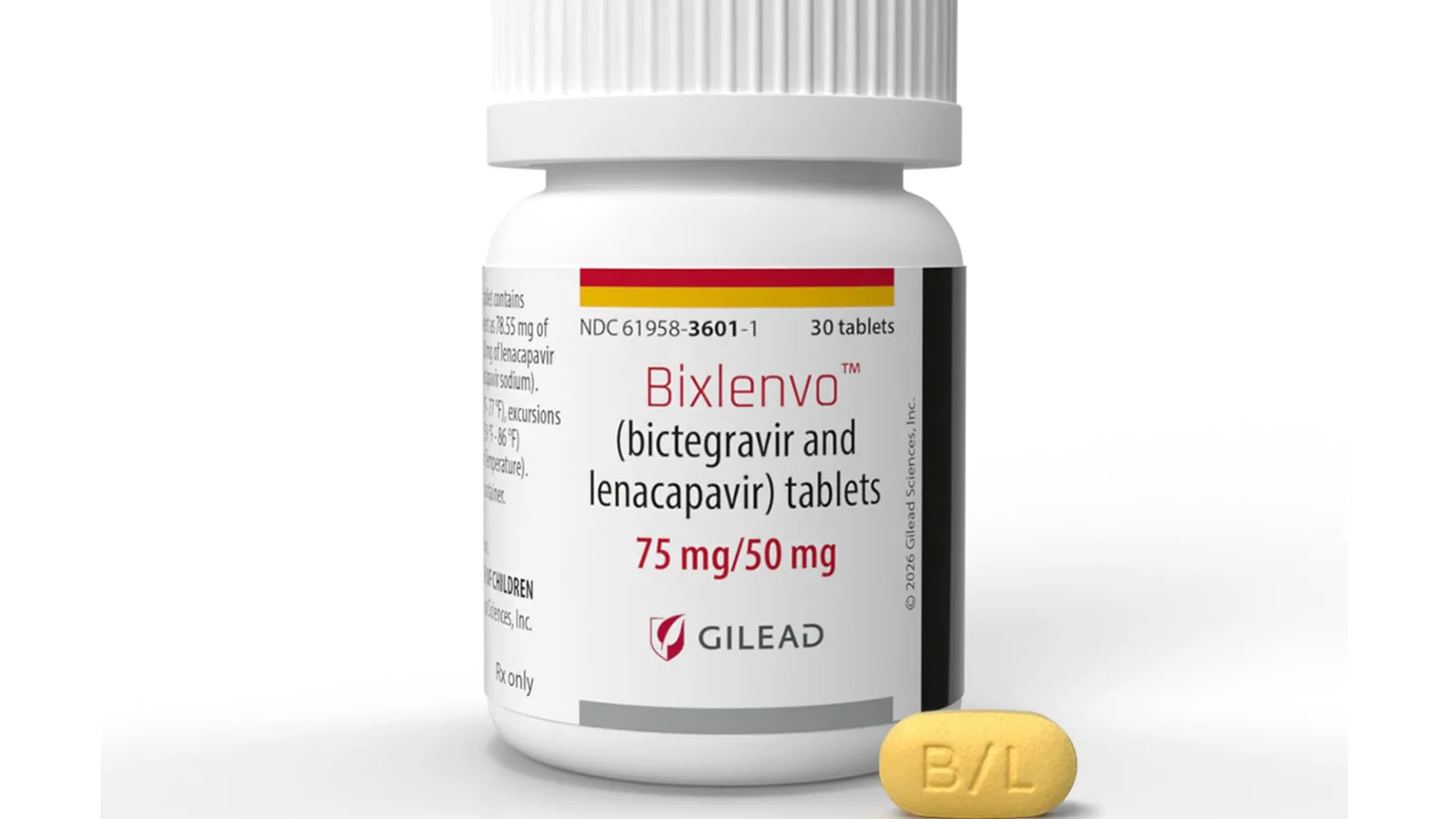
FDA approves Gilead’s once-daily Bixlenvo, a single-tablet regimen combining bictegravir and lenacapavir for adults with suppressed HIV who cannot use current one-pill options. It aims to simplify complex regimens and offer switching flexibility without replacing Biktarvy. Priced at about $4,595 for 30 days before discounts, with patient-assistance programs available. The decision is based on two Phase 3 trials showing maintained viral suppression at 48 weeks and generally favorable tolerability, with common side effects being headache, nausea and diarrhea.

PsyPost reports that analysis of baseline data from nearly a decade of randomized trials for hypoactive sexual desire disorder shows women in monogamous heterosexual relationships typically log about 2.0–3.0 sexually satisfying events every 28 days before any medication. This consistency held across four US trials of flibanserin (2.0–3.0) and four testosterone-patch trials (2.5–2.9), with European data around 2.41 and country variation (1.12–4.19). Two bremelanotide trials showed lower baselines (~1.2) likely due to a placebo run-in. The researchers label this habitual activity “mercy sex,” suggesting biopsychosocial factors—emotional closeness, partner dynamics, and social conditioning—may drive obligatory sex and cautions that measuring treatment success by event frequency can misstate true desire, especially given sample limits (heterosexual, monogamous) and subjective “satisfying” definitions.

Moderna and Merck reported positive Phase 3 data for intismeran autogene, a personalized cancer vaccine, in combination with Keytruda for melanoma, showing longer cancer-free survival versus Keytruda alone. The readout prompted stock upgrades and higher price targets for both companies, highlighting the potential of a market-of-one approach despite uncertainties about market size and applicability to other cancers. The vaccine’s roughly six-week manufacturing window enables concurrent treatment with Keytruda, raising the prospect of a new growth driver if similar results extend to other solid tumors; however, success in one cancer type does not guarantee broader approvals.

Age spots (solar lentigines) come from sun exposure and can fade with consistent use of topicals like vitamin C, azelaic acid, tranexamic acid, and retinoids, plus daily sunscreen (tinted mineral SPF to block visible light). For faster results, in-office options such as lasers or peels help. Expect 8–12 weeks to see fading, longer for deeper spots; start prevention in your 20s and have a dermatologist confirm spots aren’t melasma, PIH, or skin cancer when they change.

The FDA has approved Revolution Medicines’ daraxonrasib (Rasonque), a daily pill that nearly doubles median survival in pancreatic cancer in a trial of about 500 patients versus chemotherapy, signaling a major advance in treating one of the deadliest cancers.

Dolly Parton’s passing has drawn attention to her long history with kidney stones. A Duke Health urologist explains warning signs (notably fever with pain that may signal a life-threatening infection), notes a possible but unclear link between stones and kidney cancer, and outlines prevention strategies to reduce recurrence—hydration, limiting sodium, and balanced calcium and protein, plus seeing a nephrologist or urologist for personalized risk assessment.

The DSM is moving toward integrating biology into psychiatric diagnoses for the first time, aiming to use biomarkers and neurobiology to supplement symptom-based criteria. While current biomarkers for mental illness are limited and environmental factors blur biological signals, recent advances offer promise: blood-based biomarkers for Alzheimer's disease, inflammatory markers like CRP that may identify treatment-responsive subtypes, and genetic risk scores that could feed into precision psychiatry. The shift acknowledges overlapping symptom clusters and subgroups within disorders, with the goal of more objective, personalized diagnoses in the future, even as clinicians recognize the complexity and remaining gaps before such biology-driven DSM criteria become standard practice.

Yahoo Life’s roundup gathers 20 everyday habits people on Reddit say can secretly harm health by 40—ranging from chronic sleep deprivation, poor dental care, and a sedentary lifestyle to stress and weak social ties. The piece emphasizes that these small choices accumulate, and that prioritizing sleep, regular exercise, oral hygiene, stress management, and meaningful social connections can help protect long-term health as you approach midlife.
Landscape and survey plates are illustrative, not measured geography. Artwork provenance ↗